
 By
By 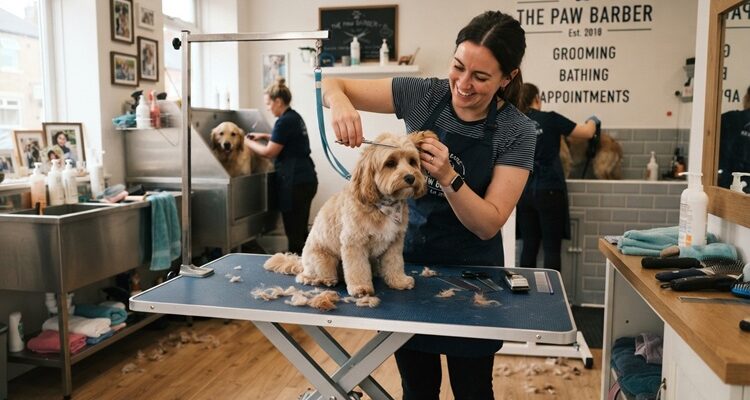
Professional pet grooming prices reflect far more than a simple bath and haircut. When you book an appointment with a professional dog barber, the final invoice accounts for specialized labor, safety protocols, equipment wear, and custom coat care tailored to your specific pet. Understanding how groomers structure their rates helps pet parents budget accurately while recognizing the skill and care involved in keeping dogs healthy, clean, and comfortable.
Table of Contents
Coat Type, Length, and Technical Styling Needs
Hair texture and coat complexity play a massive role in overall service pricing. Short, smooth coats need basic wash and wear care, whereas dense double coats or curly non-shedding fur require specialized technical skills.
- Smooth and Short Coats: Breeds like Boxers or Beagles need standard bathing, blow-drying, and minimal brush-outs, and keeping appointment times brief.
- Double-Coated Breeds: Huskies, Golden Retrievers, and Shepherds require intensive high-velocity blow-outs and specialized undercoat rake techniques to prevent severe shedding.
- Curly and Continuous-Growth Coats: Poodles, Bichons, and Doodle mixes require tedious scissoring, precise clipper handwork, and custom styling to maintain shape.
- Wire-Coated Breeds: Schnauzers and Terriers often need specialized hand-stripping techniques to maintain coat texture, demanding advanced groomer expertise.
Coat Condition and Severe De-Matting Surcharges
Well-maintained coats allow groomers to move efficiently, but tangled or matted fur completely alters the appointment workflow. Mats trap moisture against the skin, pull painfully on tissue, and hide underlying skin infections, requiring delicate, slow-paced removal.
When a dog arrives with severe matting, groomers must use specialized blade sizes and take extra time to work under tight knots safely. This process dulls expensive equipment faster and increases the risk of accidental skin nicks. Grooming salons apply de-matting fees or pelt-removal surcharges to compensate for the additional time, product, and tool maintenance required.
Pet Temperament and Special Handling Requirements
Animal behavior dictates the speed and safety of every grooming session. Calm, experienced dogs allow the barber to complete cuts quickly, whereas anxious, reactive, or senior pets require a much slower approach.
Dogs that fight the dryer, resist paw handling, or exhibit bite risks require special handling protocols. Groomers spend additional time using positive reinforcement, taking mandatory stress breaks, or assigning a second assistant to secure the pet safely. Behavior fees offset the lost time and higher physical strain involved in working with difficult or highly stressed animals.
Mobile grooming vans charge a premium convenience fee to cover doorstep delivery, vehicle maintenance, fuel costs, and dedicated one-on-one attention without the noise of a busy salon floor.
Regional Location and Local Economic Overhead
Geography heavily dictates pricing structure across the pet industry. A salon operating in a major metropolitan area faces elevated commercial rents, higher utility costs, steep business insurance premiums, and living-wage demands for certified staff.
Suburban and rural salons operate with lower commercial overhead, allowing them to offer identical services at lower base rates. Searching local market averages helps establish a realistic baseline for what professional grooming costs in your specific zip code.
Groomer Education, Certification, and Expertise
The professional qualifications of your Dog barber Herriman directly influence their pricing schedule. Anyone can buy clippers, but highly trained stylists invest time and capital into master certifications, safety training, and breed-standard education.
Groomers certified in canine CPR, coat restorative therapy, or AKC breed cuts invest in continuing education to refine their technique. Paying higher rates for certified professionals buys peace of mind, ensuring your pet is handled safely using professional equipment, proper sanitation, and correct anatomical knowledge.
Conclusion
Understanding the variables behind dog barber pricing clarifies the immense value packed into every appointment. From breed size and coat complexity to specialized temperaments, facility overhead and professional certifications, grooming rates reflect dedicated labor designed to keep pets healthy. Maintaining a consistent home brushing routine and sticking to a regular grooming schedule keeps coats manageable, prevents unexpected de-matting fees, and delivers superior results for your furry companion every time.








Comments